What is your real Investment Risk Number?
VIX
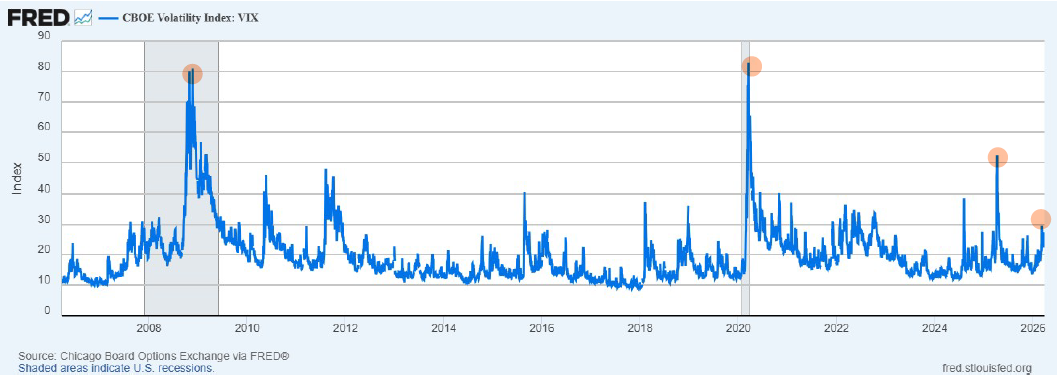
The CBOE Volatility Index (VIX), often referred to as the market’s “Fear Gauge” measures the market’s expectation of near-term (30-day) volatility implied by option prices on the S&P 500 Index. Importantly, the VIX is forward-looking, reflecting what investors collectively expect could happen, not what has already occurred. When the VIX rises, it typically signals increased uncertainty, risk aversion, or concern about potential market declines. When it falls, it reflects greater confidence and stability. Periods of elevated VIX levels often coincide with sharp market swings, increased headlines, and heightened emotional reactions from investors.
It is critical to view the VIX as a measure of sentiment, and not a signal to make reactive investment decisions. Historically, spikes in volatility have been temporary and have often occurred during periods when long-term investment opportunities were improving, not deteriorating. While elevated volatility can feel uncomfortable, it is a normal and expected part of equity investing. Maintaining a disciplined, long-term strategy, grounded in proper diversification, risk alignment, and rebalancing remains the most effective way to navigate these environments, rather than attempting to time short-term market movements based on changes in the VIX.
Navigating unexpected geopolitical events can be nerve-wracking, create additional financial stress and anxiety, and negative news headlines can impact your emotions. If you have any questions about your specific situation and aggregate investment portfolio, please schedule a Zoom Meeting or Phone Meeting to identify your Risk Number.